Sources checked 3 November 2026 · Confirm your date with the provider
Some links are affiliate links. We may earn a commission on qualifying bookings at no extra cost to you. This does not determine your price or guarantee availability.
Pandavleni and Trirashmi name the same cave group
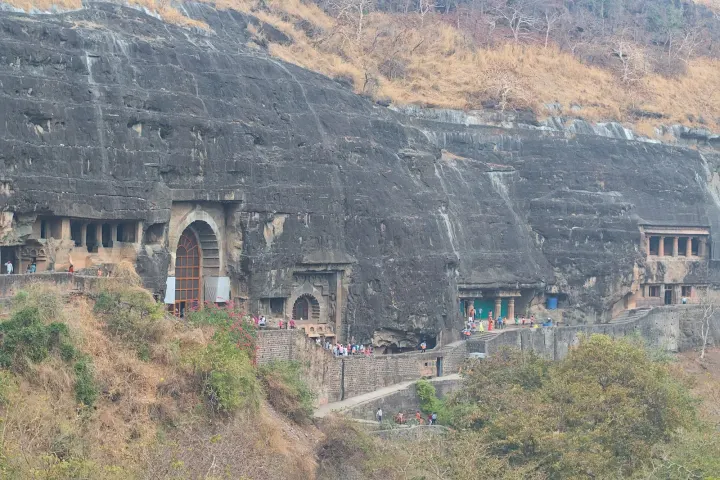
Pandavleni, also known as the Trirashmi caves, is a group of Buddhist rock-cut caves in the hills on Nashik’s southern side. Maharashtra Tourism describes twenty-four caves with a long development spanning roughly the second century BCE to the sixth century CE. The familiar Pandav name should not be turned into an unsupported claim that the epic’s heroes constructed them.
Think of the site as a historical monastic complex developed over time, not one building completed on a single date. Different rooms and façades can have different purposes and histories. A focused guide or careful reading of the site interpretation helps explain those differences more usefully than a rapid sequence of photographs.
Look for function as well as decoration
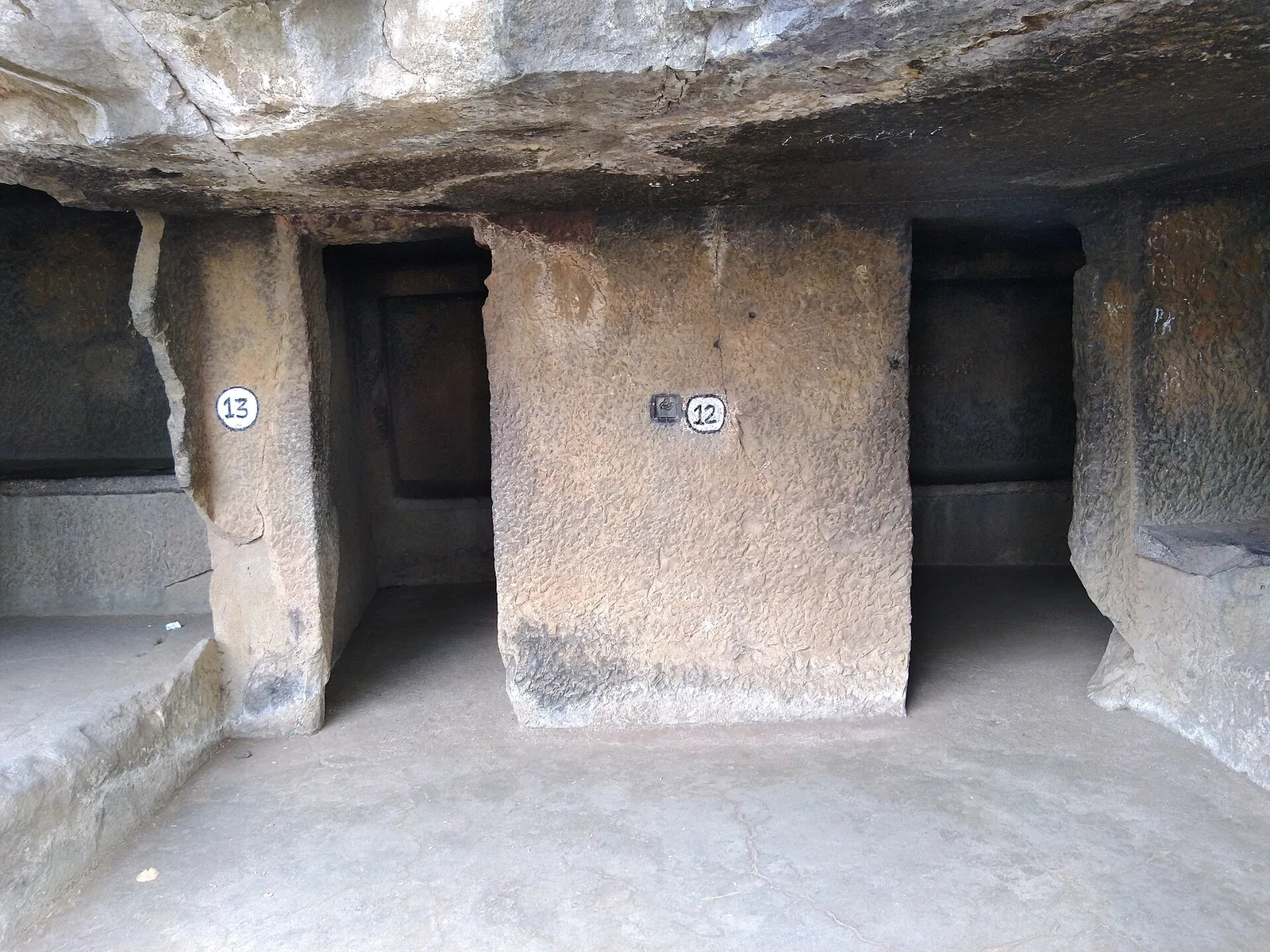
Notice the contrast between communal spaces, smaller cells, carved entrances and places associated with worship. The rock-cut setting also raises practical questions: how light enters, how people moved between rooms and how water was collected. Those observations make the visit interesting even if you are not already familiar with Buddhist architecture.
Avoid treating every inscription or sculpture as interchangeable. If a particular donor, ruler or date interests you, use the site interpretation or a qualified guide rather than guessing from an online caption. Some general tourism pages simplify the chronology. It is better to understand a few features accurately than to attach an impressive but unverified story to every cave.
Allow for the ascent and the descent
Reaching the caves involves a climb. A taxi to the base does not provide step-free access to the monument. Wear shoes with grip, carry water and judge the effort according to your own fitness and the conditions. Heat and humidity can make a short-looking ascent more demanding than expected.
The return is part of the activity too. Leave enough energy and daylight for the descent, especially after rain. Visitors with knee problems, limited mobility or difficulty with steps should obtain current access information and consider another heritage activity if necessary. Do not interpret a family photograph at the top as proof that the route suits every family.
Choose a suitable weather and daylight window
A comfortable visit needs time to climb, pause and look closely without racing the closing arrangements. Check the current opening and ticket information before setting out. We do not publish an unverified fixed fee or promise that every cave interior is always accessible. Conservation work and local management can affect particular areas.
During heavy rain or an official warning, reconsider the climb rather than relying on an old description of the path. In warm conditions, avoid making this the most strenuous part of an already overloaded day. A slower visit followed by lunch can fit better than a climb immediately before a tightly timed winery session across the city.
Protect the carvings and the experience
Keep to permitted routes and do not climb on carved details, scratch names into rock or touch surfaces where this is prohibited. Follow photography and lighting rules in the interiors. A dim space may require patience rather than flash. Keep voices considerate and leave room for other visitors to see the features.
Carry rubbish back down and do not feed wildlife. Pack water and any necessary snack in a way that does not create litter. If travelling with children, explain why the rock-cut rooms and inscriptions are more fragile than an ordinary playground. The aim is to make the history accessible without treating the monument as climbing equipment.
Pair the caves with the southern city
The caves can be a useful part of a southern-city day or a visit based at a hotel whose location fits the approach. A driver should confirm the actual entrance and pickup point. Do not assume that a nearby-looking hotel can be reached safely on foot along the main road. Include the local transfer in the plan.
For a varied short stay, the caves and an old-city session on different days give two distinct perspectives on Nashik. If wine is the main priority, keep Pandavleni as a separate morning only when the timetable allows. Our two-night outline shows how to avoid making the cave climb a rushed prelude to a long transfer.
Do not confuse Pandavleni with Ajanta and Ellora
Pandavleni is a Nashik-area visit. Ajanta and Ellora are major separate sites in the Chhatrapati Sambhajinagar/Aurangabad region and require a different travel plan. A tour product that combines Nashik with those caves is an onward circuit, not evidence that all three are local stops around the same city.
If the Nashik caves spark your interest, consider a dedicated Ajanta–Ellora extension with time for the road journeys and the sites themselves. Check weekly closures and the final destination of the package. A deeper visit to fewer caves is usually more rewarding than collecting several names while spending most of the trip in a vehicle.
Three caves to look for
With twenty-four caves on the hillside, it helps to arrive with a short list. Inscriptions at the site date from around the first century BCE onward and record gifts by rulers, officials, merchants and ordinary donors. Three caves stand out for first-time visitors because they show the different kinds of space a monastic community needed and carry some of the most important inscriptions in western India.
Signage and numbering on site follow the conventional scheme used below. If a particular cave is closed for conservation, the others still tell much of the same story.
| Cave | Type | Why it matters |
|---|---|---|
| Cave 18 | Chaitya (prayer hall) | The site's main worship hall, around the 1st century BCE, with a rock-cut stupa and a richly carved façade |
| Cave 10 | Vihara (monastery), 'Nahapana vihara' | Inscriptions of the family of the Western Kshatrapa ruler Nahapana, including his son-in-law Ushavadata |
| Cave 3 | Vihara, 'Gautamiputra vihara' | The largest monastery hall; inscriptions of Gautamiputra Satakarni and Queen Gautami Balashri |
Questions before you go
Were the caves built by the Pandavas?
The guide identifies them as a Buddhist rock-cut complex with a documented historical development. The popular name is not proof of construction by figures from the epic.
How many caves are there?
Maharashtra Tourism describes a group of twenty-four. Access to individual spaces can depend on current management and conservation conditions.
Can I reach the caves without climbing?
The normal approach involves a climb. Obtain current access details if steps or gradients are a concern; a vehicle reaching the base is not equivalent to step-free entry.
Are these the same as Ajanta or Ellora?
No. Pandavleni is near Nashik; Ajanta and Ellora belong to a separate regional journey around Chhatrapati Sambhajinagar/Aurangabad.
Which cave is the main prayer hall?
Cave 18, the chaitya hall, dating to around the first century BCE, with a rock-cut stupa and a carved façade.
Sources & editorial notes
We use official tourism and heritage records, operator information and accommodation listings. The notes below list each publisher once; the full bibliography retains individual sources. A source check is not a live operating-status check.
View the source bibliography →